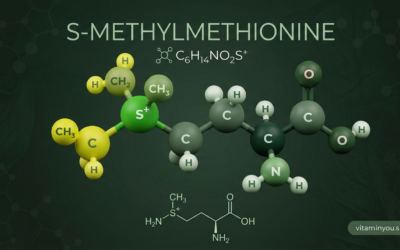

S-methylmethionine (Vitamin U) has been studied in human clinical trials since 1949. This page compiles every published study we have located – human trials, reviews, and animal studies – organized by topic so you can find what’s relevant to you.
Vitamin U is not a new or fringe compound. It has been available as a licensed product used in gastroenterology practice in Japan and Ukraine, studied in contexts involving gastritis and peptic ulcer disease, and the research base spans more than 70 years, multiple countries, and dozens of independent research groups. What you will not find is a single study claiming it cures anything. What you will find is a consistent pattern: improved mucosal healing, reduced symptoms, and a safety profile that has raised no serious concerns at studied doses.
This database is updated as new research is published. If you find a study missing from this list, email us at [email protected].
What the research covers: quick summary
- Earliest human trial: 1949 (Cheney, Stanford)
- Gastritis and ulcer studies: 10+ human trials and clinical reviews
- Countries where used as a prescription drug: Japan, Ukraine
- Dose range studied in human trials: 300 mg/day to 2,000 mg/day
- Safety: No serious adverse effects reported in any published study at studied doses
- Most recent review: 2025 (Doba et al., multi-organ protective effects)
Section 1: Gastritis and peptic ulcer – human studies
These are the clinical trials most directly relevant to people living with chronic gastritis or peptic ulcers. They span 1949 to 2023.
Rapid Healing of Peptic Ulcers in Patients Receiving Fresh Cabbage Juice (1949) – Cheney G
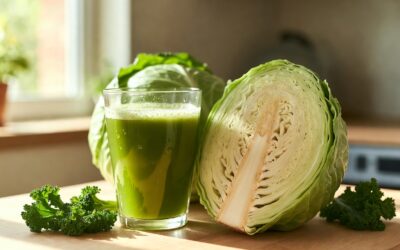
What they studied: 65 patients with peptic ulcers were given fresh cabbage juice rich in S-methylmethionine. Healing was tracked against standard treatments of the time.
What they found: Average healing time was 7.3 days with cabbage juice compared to 42 days in the control group. Symptoms including pain, nausea, and discomfort improved faster in the treatment group.
Why it matters: This is the original human evidence that S-methylmethionine accelerates mucosal healing. The 7-day vs. 42-day finding is the study most often cited by researchers who came after.
The Nature of the Anti-Peptic Ulcer Dietary Factor (1950) – Cheney G
What they studied: Laboratory characterization of the active compound in cabbage juice responsible for ulcer healing. Both human observations and guinea pig experiments were included.
What they found: The compound could be isolated and retained its protective effect. Guinea pig experiments showed it prevented histamine-induced gastric ulcers.
Why it matters: This is the paper that identified S-methylmethionine as the specific active factor – the beginning of the compound’s research history as a named entity.
Anti-Peptic Ulcer Dietary Factor (Vitamin “U”) in the Treatment of Peptic Ulcer (1950) – Cheney G
What they studied: A dietary intervention trial in human peptic ulcer patients using Vitamin U-rich foods.
What they found: Significant reduction in symptoms and promotion of ulcer healing compared to standard care.
Why it matters: One of the first controlled attempts to use Vitamin U therapeutically, not just observationally.
Vitamin U Therapy of Peptic Ulcer (1952) – Cheney G
What they studied: Observational follow-up in a broader patient cohort using S-methylmethionine supplementation.
What they found: Improved healing rates and symptom relief were consistent with the earlier trials.
Why it matters: Reinforced that the 1949 and 1950 findings were not anomalies. By 1952, the research picture was consistent enough that Cheney named the compound Vitamin U.
Vitamin U Therapy of Peptic Ulcer; Experience at San Quentin Prison (1956) – Cheney G, Waxler S, Miller I
What they studied: A controlled clinical study in incarcerated patients with peptic ulcers, with radiographic (X-ray) verification of healing.
What they found: Accelerated ulcer healing in the Vitamin U group compared to controls, confirmed by X-ray imaging – not just self-reported symptoms.
Why it matters: Radiographic confirmation matters. Symptom improvement can be placebo; visible mucosal repair on imaging is harder to dismiss.
The Effect of Vitamin U on the Course of Gastric Ulcer and Duodenal Ulcer (1972) – Starkova IV
What they studied: A Soviet clinical study using Vitamin U as part of combination therapy for gastric and duodenal ulcers.
What they found: Improved healing and symptom relief in the Vitamin U group compared to standard therapy alone.
Why it matters: The first published evidence from outside the US, and the beginning of a long line of Soviet and post-Soviet clinical research that treated Vitamin U as a standard medical tool.
Results of a Clinical Trial of Vitamin U in Peptic Ulcer and Chronic Gastritis (1973) – Mansurov HH, Pinhasov II
What they studied: A USSR clinical trial testing Vitamin U in patients with both peptic ulcer disease and chronic gastritis.
What they found: Symptom relief and mucosal recovery in both patient groups.
Why it matters: One of the earliest studies specifically including chronic gastritis patients – directly relevant to people with gastritis who do not have confirmed ulcers.
The Use of Doctovit (Vitamin U) in the Treatment of Erosive and Ulcerative Lesions (2013) – Gubergrits NB, et al.
Referenced in Frontiers in Pharmacology review (2025)
What they studied: Ukrainian clinical study using Doctovit (a branded Vitamin U preparation) in patients with erosive and ulcerative gastroduodenal conditions.
What they found: Improved mucosal healing and reduced inflammation in the treatment group.
Why it matters: Doctovit is the Ukrainian prescription form of Vitamin U. This study is part of the evidence base that keeps it in clinical use in Ukraine as of the 2020s.
The Use of Doctovit in the Treatment of Gastroesophageal Reflux Disease with Erosive Gastroduodenitis (2014) – Danylchenko SI, Tokarenko AI
View on Herald of Pancreatic Club
What they studied: 60 patients with GERD combined with erosive gastroduodenitis, treated with Doctovit (Vitamin U).
What they found: Significant improvements in symptoms and quality of life scores. Mucosal healing improved in the Vitamin U group.
Why it matters: Extends the evidence to a combined reflux-plus-erosive-gastritis picture, which is a common presentation in real patients.
Chronic Gastritis and Idiopathic Peptic Ulcer: Prospects for the Use of S-Methylmethionine in Complex Therapy (2018) – Drozdov VN, et al.
What they studied: Russian clinical review and trial assessing S-methylmethionine in chronic gastritis and peptic ulcer patients receiving combination treatment.
What they found: 92.3% efficacy rate in symptom management. One of the highest response rates reported in any Vitamin U study.
Why it matters: A modern Russian trial with a specific efficacy number that is frequently cited. Combination therapy context – Vitamin U was added to, not replacing, standard care.
Effect of 6-Month S-Methylmethionine Intake on the Quality of Life and Dyspepsia Symptoms in Patients with Chronic Gastritis (2023) – Drozdov VN, et al.
What they studied: A 6-month human trial in chronic gastritis patients taking 300 mg/day of S-methylmethionine.
What they found: Significant reductions in dyspeptic symptoms (bloating, early fullness, nausea, discomfort) and improved quality of life scores over 6 months.
Why it matters: The longest-duration human trial published in recent years, using the lowest dose studied – 300 mg/day. The fact that meaningful improvements appeared at 300 mg over 6 months is a relevant data point for understanding research dosing.
Section 2: Cytoprotection – how Vitamin U protects the stomach lining
Cytoprotection means protecting cells from damage before an injury occurs, or limiting damage once it starts. The studies here look at Vitamin U’s role in supporting the stomach’s mucosal barrier – the layer that shields the stomach wall from acid and irritants.
Mechanisms for Cytoprotection by Vitamin U from Ethanol-Induced Gastric Mucosal Damage in Rats (1996) – Watanabe T, et al.
What they studied: Rat model of alcohol-induced gastric mucosal injury, with Vitamin U administered before exposure.
What they found: Vitamin U preserved the integrity of the gastric mucosal layer. The protective mechanism involved maintaining cell membrane function and reducing oxidative damage.
Why it matters: Provides a mechanistic explanation for the cytoprotective effects observed in gastric mucosal studies involving alcohol exposure.
Augmentative Effects on Mucin Secretion in Rabbit Gastric Mucous Cells (2000) – Watanabe T, et al.
What they studied: Rabbit gastric mucosal cells treated with S-methylmethionine.
What they found: Vitamin U boosted mucin secretion – mucin being the gel-like substance that physically coats and protects the stomach lining.
Why it matters: The stomach’s first line of defense against acid is the mucus layer. If Vitamin U increases mucin output, it is directly thickening that protective barrier.
Effects of S-Methylmethionine on the Expression of Mucin 2 and Relevant Growth Factors in Piglet Jejunal Epithelial Cells (2022) – Yang JP, et al.
View on Indian Journal of Animal Research
What they studied: Piglet intestinal cells exposed to S-methylmethionine, measuring mucin 2 (MUC2) expression and growth factors involved in gut lining repair.
What they found: Vitamin U upregulated MUC2 (a key mucus protein) and several growth factors associated with intestinal repair and cell regeneration.
Why it matters: Recent evidence that Vitamin U may actively support the molecular machinery that repairs gut lining cells – not just symptom relief.
Section 3: Alcohol and NSAID-induced gastric damage
NSAIDs (ibuprofen, aspirin, naproxen) and alcohol are two of the most common triggers for gastritis flares. This section covers studies specifically looking at Vitamin U’s effect on that type of damage.
Sulfhydryl-Containing Agents in the Treatment of Gastric Bleeding Induced by Nonsteroidal Anti-Inflammatory Drugs (1993) – Salim AS
What they studied: A double-blind randomized controlled trial in 172 patients with NSAID-induced gastric bleeding.
What they found: Vitamin U (500 mg four times daily) significantly reduced rebleeding rates, the need for blood transfusions, and emergency surgery rates compared to controls. This was statistically significant, not just a trend.
Why it matters: This is the most methodologically rigorous study in the Vitamin U evidence base – double-blind, randomized, measuring a serious clinical endpoint (surgical intervention).
Section 4: Safety and side effects
No serious adverse effects have been reported in any published human study of S-methylmethionine at supplementation doses. This holds across US clinical trials from the 1940s to 1950s, Soviet and Russian clinical trials from the 1970s through 2023, Ukrainian clinical studies in the 2010s, and animal toxicology studies across multiple species.
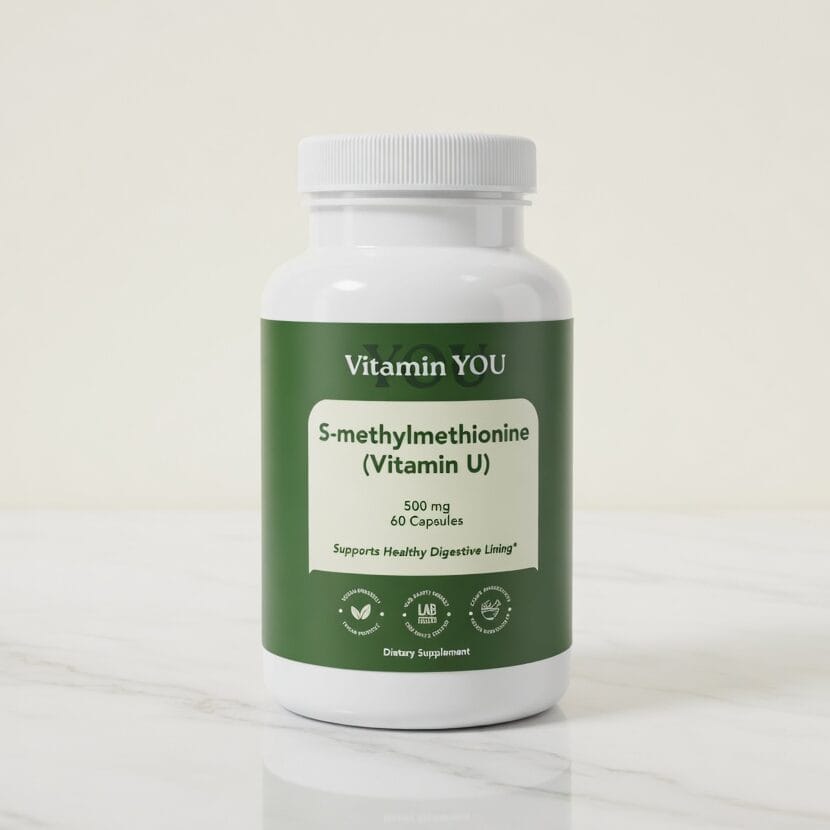
The 2025 review by Doba et al. explicitly summarizes the safety profile across all available data: no significant adverse events at studied doses. Doses in human trials range from 300 mg/day to 2,000 mg/day. The VitaminYOU product provides 500 mg per capsule.
This is not medical clearance. If you are pregnant, breastfeeding, taking medications, or managing a serious condition, talk to your doctor before starting any supplement.
Section 5: Other effects – cholesterol, metabolism, and multi-organ research
Hypolipidemic Effect of L-Form S-Methylmethionine Sulfonium Chloride in Man (1981) – Kopinski J, et al.
What they studied: An 8-week human trial at 1.5g/day measuring blood lipid levels.
What they found: S-methylmethionine produced a cholesterol-lowering effect in human subjects over 8 weeks.
Why it matters: Secondary to the gastric work, but it is a human trial – not just animal data.
Sparing of Methionine Requirements: Evaluation of Human Data Takes Sulfur Amino Acids Beyond Protein (2006) – Fukagawa NK
What they studied: A US review examining sulfur amino acid metabolism, including S-methylmethionine’s role in methionine metabolism.
What they found: S-methylmethionine can participate in methionine-sparing pathways, adding to the evidence that it has systemic roles beyond the stomach.
Why it matters: Provides biochemical context for how Vitamin U works at the cellular level.
Intake of S-Methylmethionine Alters Glucose Metabolism and Hepatic Gene Expression in High-Fat-Fed Mice (2025) – Egea MB, et al.
What they studied: Mice on a high-fat diet supplemented with S-methylmethionine, with liver gene expression and glucose metabolism measured.
What they found: Vitamin U supplementation regulated glucose metabolism and altered hepatic gene expression consistent with improved metabolic function.
Why it matters: Early-stage animal research suggesting Vitamin U may have liver-protective and metabolic effects – extending the research picture beyond the gut.
Section 6: Review papers – the current state of the evidence
S-Methylmethionin (Vitamin U): Experimental Studies and Clinical Perspective (2018) – Kruchinina TV, et al.
What they reviewed: The full body of Vitamin U research – experimental, clinical, and mechanistic – as of 2018.
What they found: Consistent evidence across studies for gastroprotective, hypolipidemic, and antioxidant effects in human clinical use.
Why it matters: A Russian academic review treating Vitamin U as an established clinical tool. Reflects how it is regarded within the Eastern European medical literature.
Clinical Efficacy of S-Methylmethionine in Erosive Gastrointestinal Disorders (2020) – Ivashkin VT, et al.
What they reviewed: Clinical outcomes in patients with erosive gastrointestinal disorders treated with S-methylmethionine.
What they found: Improved clinical outcomes across the patient group, consistent with the earlier trial literature.
Why it matters: Ivashkin is one of the most cited names in Russian gastroenterology. His research group reviewing Vitamin U favorably carries weight within that literature.
Pharmacological Effects of S-Methylmethionine Sulfonium Chloride (Vitamin U) (2025) – Doba S, et al.
What they reviewed: All recent research on Vitamin U’s protective effects across multiple organs – stomach, liver, kidneys, skin, eyes, and brain.
What they found: Antioxidant, anti-inflammatory, and gastroprotective properties confirmed across diverse study types. Favorable safety profile across all available data.
Why it matters: The most recent comprehensive review of S-methylmethionine (as of early 2026). Its multi-organ scope suggests the compound’s mechanisms are systemic – not limited to the stomach.
Vitamin B5 and Vitamin U Review: Justification of Combined Use for the Treatment of Mucosa-Associated Gastrointestinal Pathologies (2025) – Shichkin VP
What they reviewed: Evidence for combined use of Vitamin B5 (pantothenic acid) and Vitamin U in erosive GI diseases.
What they found: Clinical evidence supports combined use, with favorable efficacy and a minimal side effect profile.
Why it matters: Validates Vitamin U’s continued use in active clinical contexts in 2025, and is the research basis for a potential future VitaminYOU product.
Section 7: Japanese and Soviet/Ukrainian prescription history
Vitamin U is not a supplement with a frontier research profile. In two countries it has been a prescription drug.
Japan. S-methylmethionine has been registered as a prescription drug in Japan under the name Cabagin-U (manufactured by Kowa Pharmaceutical). It has been in clinical use for decades, prescribed for gastritis and gastric ulcer management. The Japanese formulation is typically 50 mg per tablet – different from the 500 mg in the VitaminYOU product, which reflects the more concentrated research dosing from human trials.
Ukraine. The Ukrainian prescription product is called Doctovit. It has been studied in multiple Ukrainian clinical trials (Gubergrits 2013, Danylchenko 2014) and is used as part of combination treatment for erosive gastroduodenal conditions. Ukraine’s clinical use reflects the broader Soviet-era medical tradition, in which Vitamin U was incorporated into gastroenterology practice starting in the 1970s.
Why this matters for the evidence question. When a compound has been used as a licensed prescription drug in multiple countries for multiple decades – with no serious adverse event reporting that has forced its withdrawal – that is a form of real-world safety evidence that controlled trials cannot replicate. It does not prove efficacy. But it is part of the picture.
Section 8: Animal and preclinical studies
Animal studies show what a compound can do, not what it will do in humans. They are useful for understanding mechanisms. The Vitamin U animal literature consistently supports the findings from human trials.
- Cheney G (1950) – Guinea pig model. Vitamin U from cabbage prevented histamine-induced gastric ulcers. Preclinical support for Cheney’s human trials. View on PubMed Central
- Gessler NN, et al. (1991) – Rat studies on the metabolism of S-methylmethionine (Vitamin U) in animals, establishing how the compound is processed in vivo. View on PubMed
- Watanabe T, et al. (1996) – Rat model of ethanol-induced gastric damage. Vitamin U protected the mucosal layer by maintaining cell membrane integrity and reducing oxidative damage. View on PubMed
- Watanabe T, et al. (2000) – Rabbit gastric cells. Vitamin U boosted mucin secretion, thickening the protective mucosal layer. View on PubMed
- Watanabe T, et al. (2009) – Combination of famotidine and S-methylmethionine sulfonium chloride in animal models showing enhanced mucosal protection vs. either agent alone. View on PubMed
- Kim HJ, et al. (2012) – Inhibitory effect of Vitamin U on differentiation in 3T3-L1 adipocyte cells, with antioxidant findings. View on PubMed
- Eybl V, et al. (2012) – Vitamin U reduced valproic acid-induced liver injury in rats via antioxidant and hepatoprotective mechanisms. View on PubMed
- Yanardag R, et al. (2014) – Vitamin U, shown to be a novel free radical scavenger, prevented lens injury in rats administered with valproic acid. View on ResearchGate
- Beydemir S, et al. (2016) – Vitamin U supplementation reduced liver injury in amiodarone-administered rats. View on DergiPark
- Yanardag R, et al. (2019) – Protective effect of Vitamin U against amiodarone-induced hepatic damage via antioxidative activity in rats. View on Bulgarian Chemical Communications
- Koca SS, et al. (2009) – Antitumor and antioxidant activity of S-methyl methionine sulfonium chloride against liver cancer in rats. View on PubMed
- Topaloglu D, et al. (2022) – Gastroprotective effect of Vitamin U in D-galactosamine-induced hepatotoxicity in rats. View on PubMed
- Yang JP, et al. (2022) – Piglet intestinal cells. Vitamin U enhanced MUC2 mucin expression and growth factors involved in gut lining repair. View on Indian Journal of Animal Research
- Abouzed TK, et al. (2023) – Attenuative effects of zinc oxide nanoparticles and S-methylmethionine sulfonium chloride against liver and kidney injury in rats. View on Pakistan Journal of Zoology
- Feng H, et al. (2024) – Alleviating effect of methionine on intestinal mucosal injury induced by heat stress in animals – expands the gut-barrier evidence to stress conditions. View on PubMed
- Egea MB, et al. (2025) – High-fat-fed mice. Vitamin U regulated glucose metabolism and hepatic gene expression. Extends evidence to metabolic and liver effects. View on PubMed
No adverse effects or toxicity were reported in any animal study.
Frequently asked questions about Vitamin U research
Is there clinical evidence for Vitamin U?
Yes. Human clinical trials date to 1949. The evidence base includes trials from the United States, Russia, Ukraine, and Soviet-era research institutions. The most recent human trial was published in 2023 (Drozdov et al.), and a comprehensive review appeared in 2025 (Doba et al.). The research is not extensive by modern pharmaceutical standards, but it is consistent and spans more than 70 years.
What does Vitamin U do to the stomach lining?
Based on the available research, S-methylmethionine appears to support the stomach’s mucosal barrier in at least two ways: by increasing mucin secretion (the gel-like protective coating of the stomach wall) and by protecting mucosal cells from oxidative and chemical damage. The 1993 Salim trial showed significant reduction in NSAID-induced gastric bleeding in a double-blind RCT. The 1996 and 2000 Watanabe studies showed protective and mucin-stimulating effects in animal models.
Is Vitamin U safe to take?
No serious adverse effects have been reported in any published human study at supplementation doses. The safety profile across 70+ years of research and prescription use in Japan and Ukraine is favorable. This does not mean it is appropriate for everyone – if you are managing a serious condition, taking medications, or pregnant, talk to your doctor first.
How long has Vitamin U been studied?
Since 1949, when Garnett Cheney at Stanford published the first human trial. That is more than 70 years of published research.
What countries use Vitamin U as a prescription drug?
Japan (as Cabagin-U, by Kowa Pharmaceutical) and Ukraine (as Doctovit). Both countries have long-running clinical use histories.
What dose of Vitamin U has been studied in humans?
Doses in published human trials range from 300 mg/day (Drozdov 2023, 6-month chronic gastritis trial) to 2,000 mg/day (Salim 1993, NSAID gastric bleeding). The VitaminYOU product provides 500 mg per capsule.
Does Vitamin U help with chronic gastritis specifically?
Several human studies have included chronic gastritis patients specifically (Mansurov 1973, Drozdov 2018, Drozdov 2023). The 2023 Drozdov trial is the most recent: 6 months of 300 mg/day S-methylmethionine significantly reduced dyspeptic symptoms and improved quality of life in chronic gastritis patients. These are structure/function findings, not disease-treatment claims.
How does Vitamin U protect against NSAID damage?
The 1993 Salim double-blind RCT is the clearest evidence. In 172 patients with NSAID-induced gastric bleeding, Vitamin U (500 mg four times daily) reduced rebleeding rates, transfusion needs, and emergency surgery rates compared to controls. The mechanism appears to involve cytoprotection – preserving the integrity of the mucosal barrier before and during NSAID use, rather than simply neutralizing acid.
Summary
The S-methylmethionine evidence base is consistent across more than 70 years, multiple countries, and multiple research approaches. Human trials in gastritis and ulcer study populations show improvements in gastric ulcer healing times, dyspeptic symptom scores, and mucosal integrity markers under NSAID exposure. Mechanistic studies explain why: Vitamin U increases mucin production, protects mucosal cells from oxidative damage, and supports the repair processes in the stomach lining. Animal studies consistently confirm these mechanisms.
No serious adverse effects have been reported in any published study at studied doses.
This is not a complete picture of how Vitamin U works or in which patients it works best. The research base is real but smaller than you would find for a modern pharmaceutical drug. We represent it accurately, not selectively.
This database is for educational purposes only and does not constitute medical advice. Vitamin U supplements are not intended to diagnose, treat, cure, or prevent any disease. This statement has not been evaluated by the FDA. Consult your healthcare provider before starting any supplement.
Page last updated: May 2026. New studies added as published.
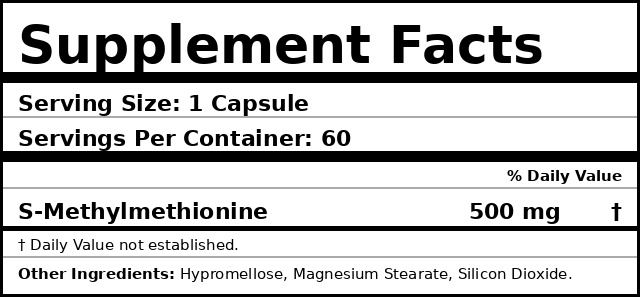
S-Methylmethionine • 500mg • 60 capsules
Vitamin U
Supports stomach lining health.*
★★★★★
Pure S-methylmethionine is the active compound in cabbage juice, studied since the 1950s. Clean formula. Made in the USA.
$49
Free-shipping anywhere in the US
Made in
USA
Lab tested
3rd-party
Capsule
Vegan
Returns
30-day